TPS Berlin Logo
Background

What is repetitive transcranial magnetic stimulation (rTMS)?

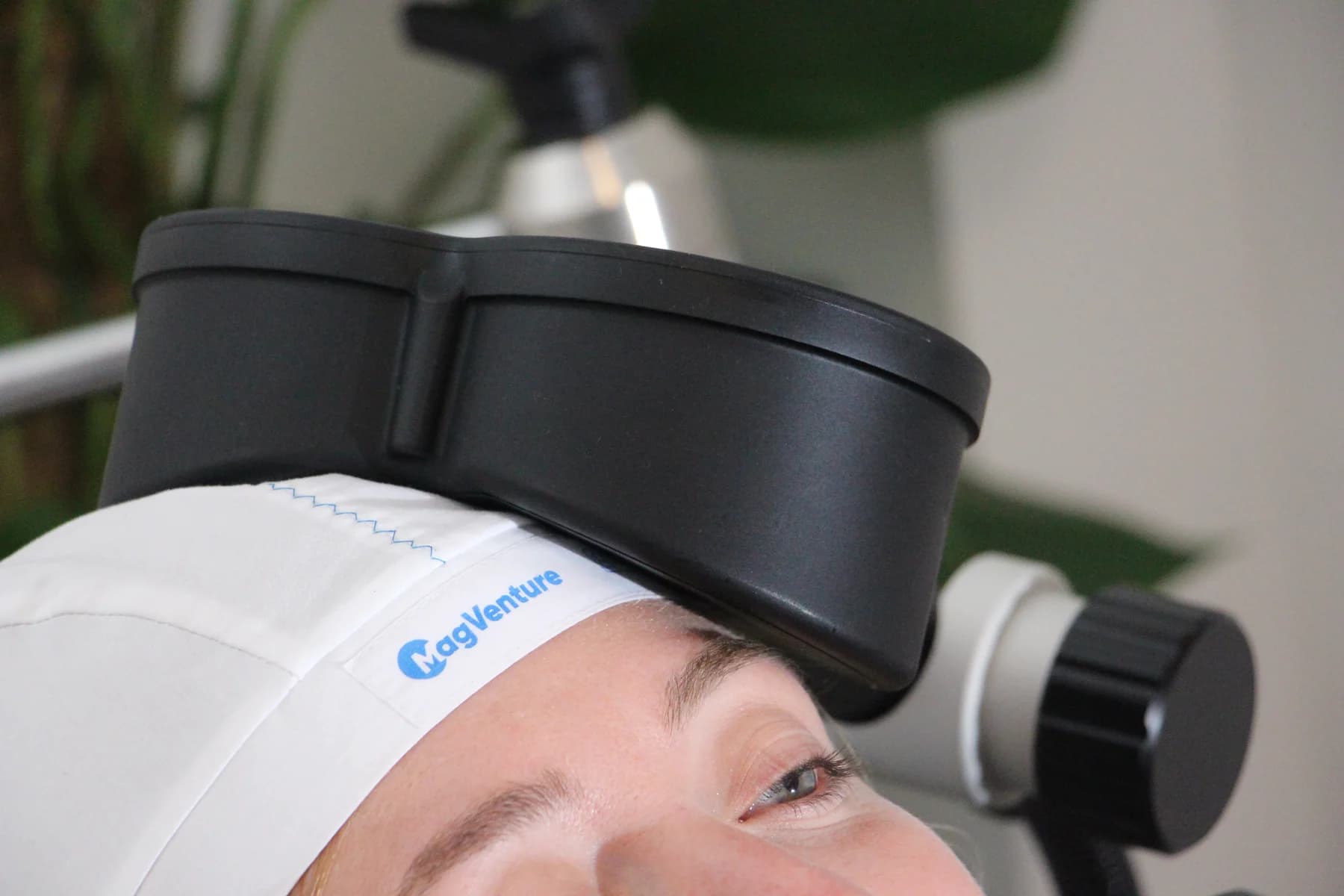
A coil held against the head generates short magnetic pulses that stimulate nerve cells in a small area of the cortex - as an outpatient, without surgery or anaesthesia.

The German National Care Guideline on unipolar depression (2022) recommends rTMS: it “should be offered for treatment-resistant depressive episodes” (recommendation 7-29, grade B). Other indications are treated as an individual treatment attempt. View the guideline

Repetitive transcranial magnetic stimulation treatment at our Berlin practice
Mechanism

How does rTMS act on the brain?

The physical principle is well understood; the biological pathways are still being researched. Three levels interlock:

A magnetic field, not a current

A short, strong current pulse runs through the coil - none of it enters the head. What acts is the magnetic field it creates: it passes through scalp and skull unimpeded and stimulates the nerve cells in the target area. The field strength is roughly that of an MRI scanner.

Steering excitability

Whether an area is stimulated or dampened depends mainly on the pulse frequency: high-frequency stimulation (around 10 Hz) increases excitability, low-frequency stimulation (around 1 Hz) reduces it. In depression, the left dorsolateral prefrontal cortex is usually stimulated at high frequency - a region that imaging studies often find underactive.

Repetition and plasticity

A single pulse lasts only milliseconds. Only repetition across a treatment series - hence "repetitive" - leads to longer-lasting changes in signal transmission between nerve cells. Effects on neurotransmitters and on the coupling between distant brain areas have been described, among others.

Treatment course

How treatment works

From the first conversation to the end of the series - outpatient and without after-effects.

1

Step 1

First appointment and assessment

Dr Schwarz discusses your situation, your treatment so far and your goals. This includes questions about pre-existing conditions, medication and implants. The conversation is free of charge and without obligation.

2

Step 2· 20-30 sessions

Treatment series

The first session takes longer: we determine the motor threshold and define the target area. With the theta burst protocol, a treatment session then takes only a few minutes, so several can be done on the same day and the series can be scheduled compactly.

3

Step 3

Joint review

At the end we discuss the course of treatment, the next steps and whether maintenance sessions make sense.

← swipe to browse →

The session

What a session feels like - and what can occur

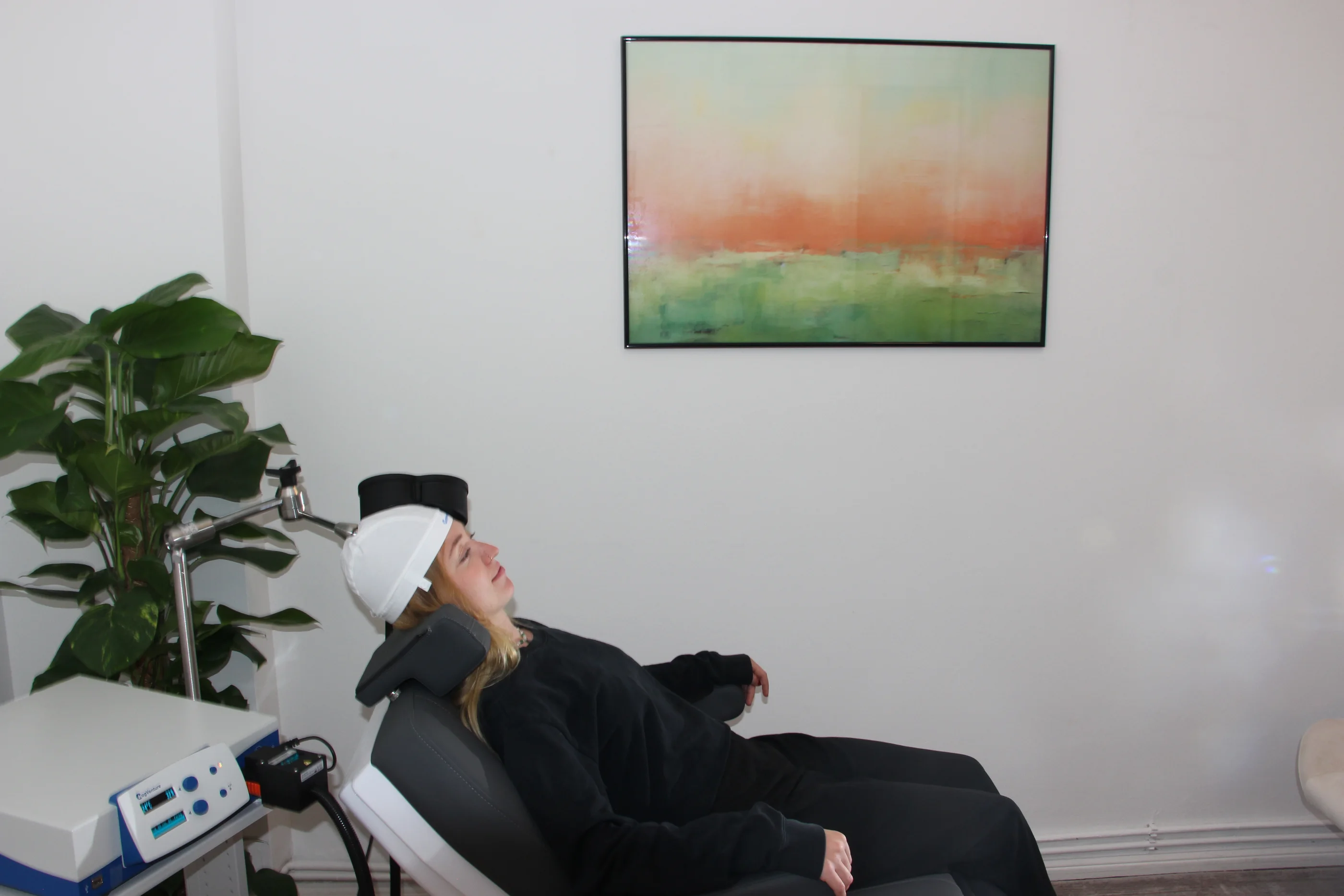
You sit awake and relaxed in a treatment chair with the coil resting against the side of your head. The pulses feel like a light tapping on the scalp - many find it pleasant, some mildly uncomfortable to slightly painful, and we adjust the settings accordingly. No anaesthesia or sedation is needed, your ability to drive is unaffected, and you can go home immediately afterwards.

Evidence

What the research shows

rTMS for depression has been the subject of controlled trials for more than two decades and is listed as a treatment option in the German S3/National Care Guideline on unipolar depression (AWMF 2022). Three of those studies, each with its limitations:

2017n = 4233

rTMS bei akuten depressiven Episoden - Netzwerk-Metaanalyse der Protokolle

Brunoni, Chaimani, Moffa et al. · JAMA Psychiatry

Hochfrequenz-rTMS: Odds Ratio 3,07 (95%-KI 2,24-4,21) fuer Ansprechen gegenueber Schein

Context: Fuer seltenere Protokolle lagen nur wenige Studien vor, die Schaetzungen sind dort entsprechend unpraeziser.

View study
2018n = 414

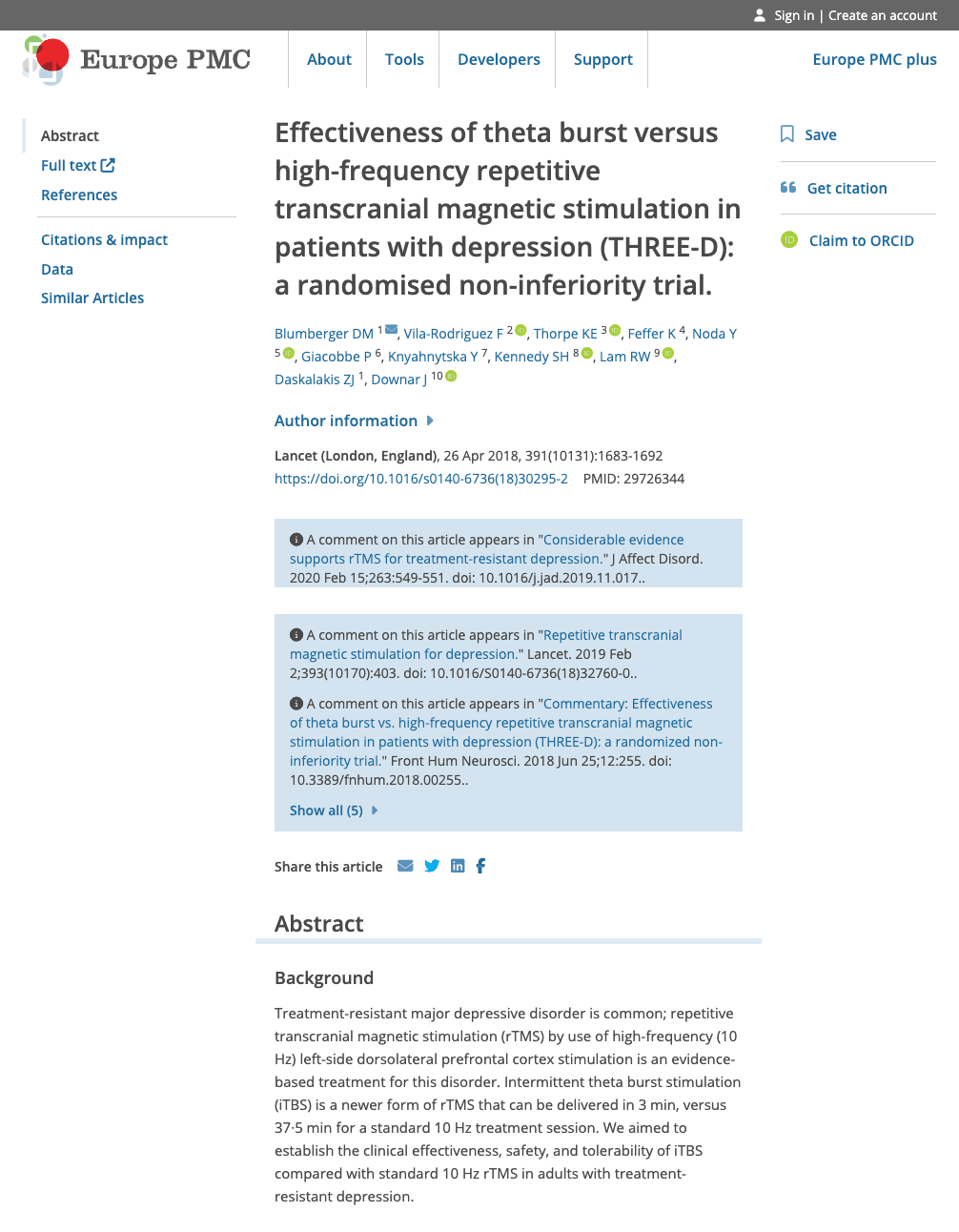
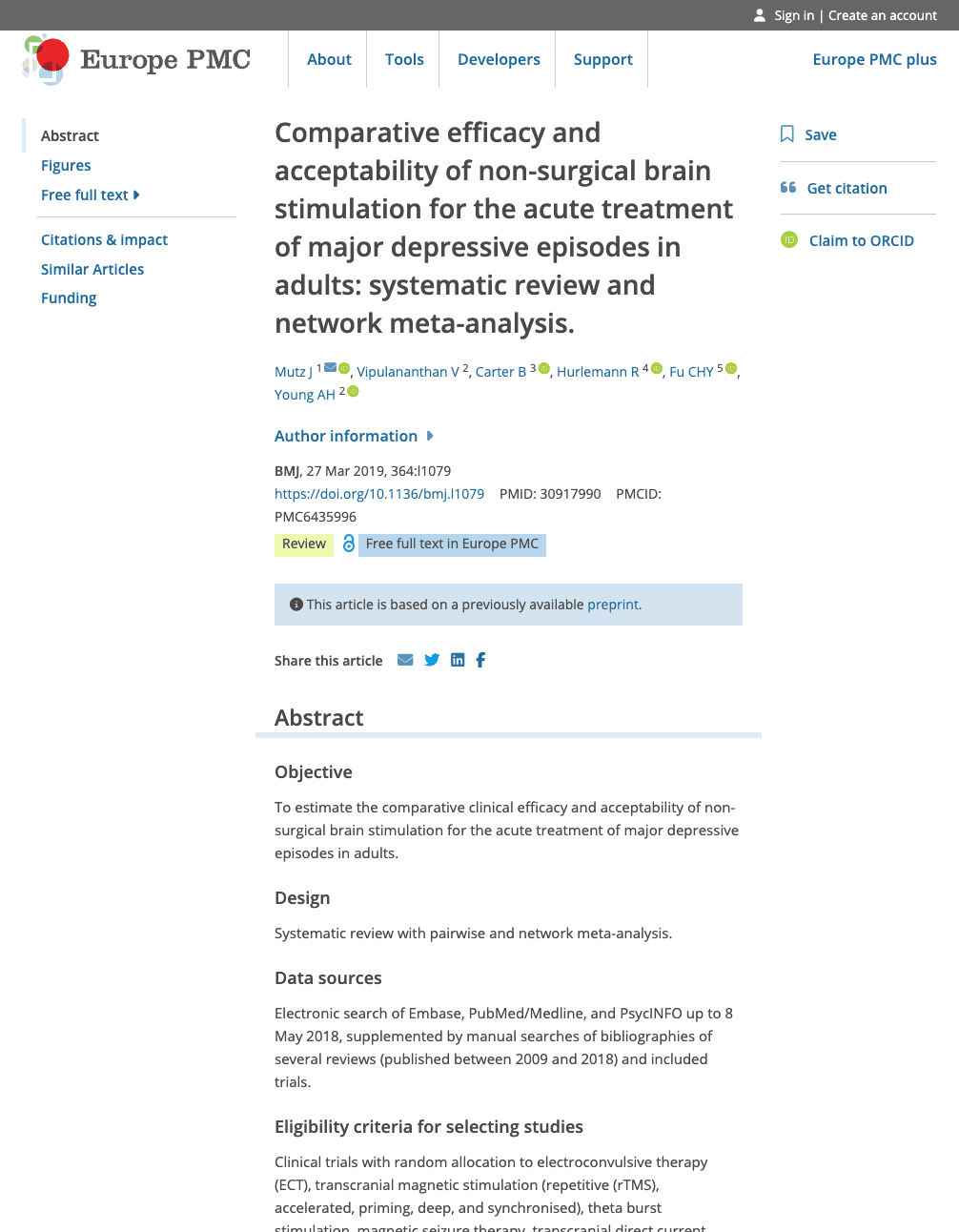
Effectiveness of Theta Burst versus High-Frequency Repetitive Transcranial Magnetic Stimulation in Patients With Depression (THREE-D): A Randomised Non-Inferiority Trial

Blumberger, Vila-Rodriguez, Thorpe et al. · The Lancet

HAMD-17 sank in beiden Gruppen praktisch identisch (23,5 -> 13,4 unter 10 Hz; 23,6 -> 13,4 unter iTBS) - iTBS war der 10-Hz-rTMS nicht unterlegen

Context: Nichtunterlegenheitsstudie ohne Sham-Arm - sie belegt die Gleichwertigkeit beider aktiver Protokolle, nicht die Überlegenheit gegenüber einer Scheinbehandlung (dafür stehen die sham-kontrollierten Studien). Offene Behandlung mit verblindeter Auswertung; untersucht wurde therapieresistente Depression.

View study
2012n = 307

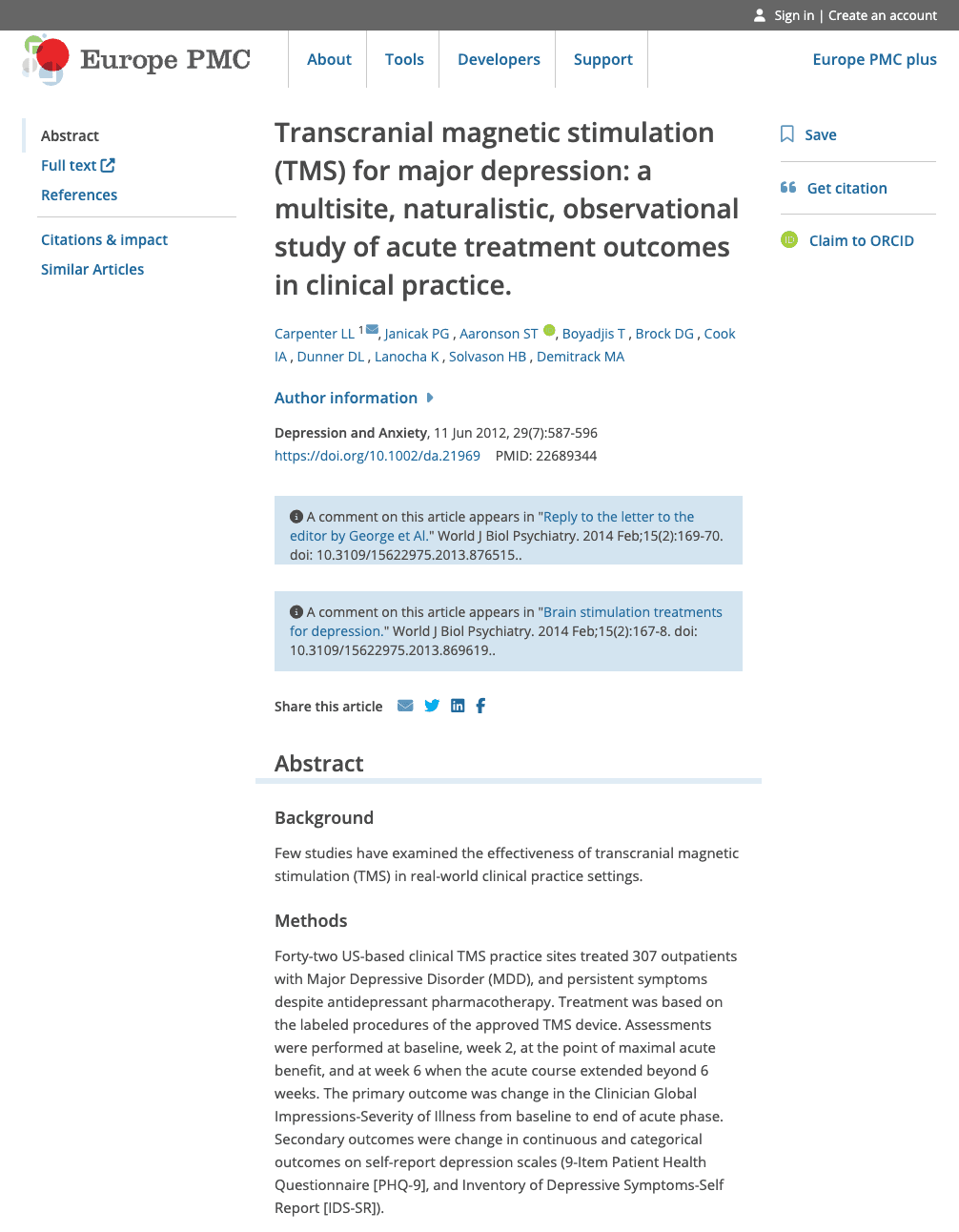
Transcranial Magnetic Stimulation (TMS) for Major Depression: A Multisite, Naturalistic, Observational Study of Acute Treatment Outcomes in Clinical Practice

Carpenter, Janicak, Aaronson et al. · Depression and Anxiety

Ansprechrate (klinisch, CGI-S): 58,0%; Remission: 37,1%

Context: Naturalistische Beobachtung ohne Kontroll-/Sham-Gruppe - ein Placebo-Anteil lässt sich nicht herausrechnen, kein randomisiertes Design. Die Stärke liegt in der Übertragbarkeit auf die reale Versorgungspraxis, nicht im kausalen Wirksamkeitsnachweis (den liefern die RCTs).

View study
Targeting

How we set intensity and target area

Before the first treatment we determine your motor threshold: the coil is positioned over the motor cortex and the intensity adjusted until a visible twitch of the hand muscles appears. The treatment intensity is then set as a percentage of that personal threshold - every head conducts the magnetic field slightly differently.

The target area over the prefrontal cortex is located using standardised head measurements (the Beam F3 method, based on the international 10-20 system). We deliberately do not work with neuronavigation: we do not offer image-guided targeting based on an individual MRI for rTMS.

Locating the target by head measurements is the common approach for the established depression protocols. Whether neuronavigation improves treatment outcomes is judged differently across the literature. Accordingly, we do not run study protocols that require individual image-guided targeting.

For transcranial pulse stimulation (TPS) we do work MRI-guided - there, navigation is part of the procedure. To the TPS page

Costs

Costs and reimbursement

Private health insurers and civil-service assistance schemes usually reimburse rTMS fully or partly, depending on the policy; we provide the medical rationale. Statutory health insurers do not list the procedure in their benefits catalogue, which makes rTMS a self-pay service there: billing follows the German scale of medical fees (GOÄ) per session, coming to about 1,975 € for a series of 20 sessions. The introductory conversation is free of charge and without obligation.

Contact

Questions about rTMS?

Whether rTMS is an option in your situation is best clarified in conversation. Write to us and we will get back to you.

Mit Angabe der Telefonnummer kontaktieren wir Sie ggf., um mehr über Ihre Erkrankung zu erfahren.

We will get back to you as soon as possible.