

Background
What is transcranial direct current stimulation (tDCS)?
tDCS is a non-invasive procedure that applies a very weak electrical current through electrodes placed on the scalp - without medication, without surgery, without anaesthesia. At our practice, we use tDCS for the treatment of depression.

The Device
tDCS at our practice
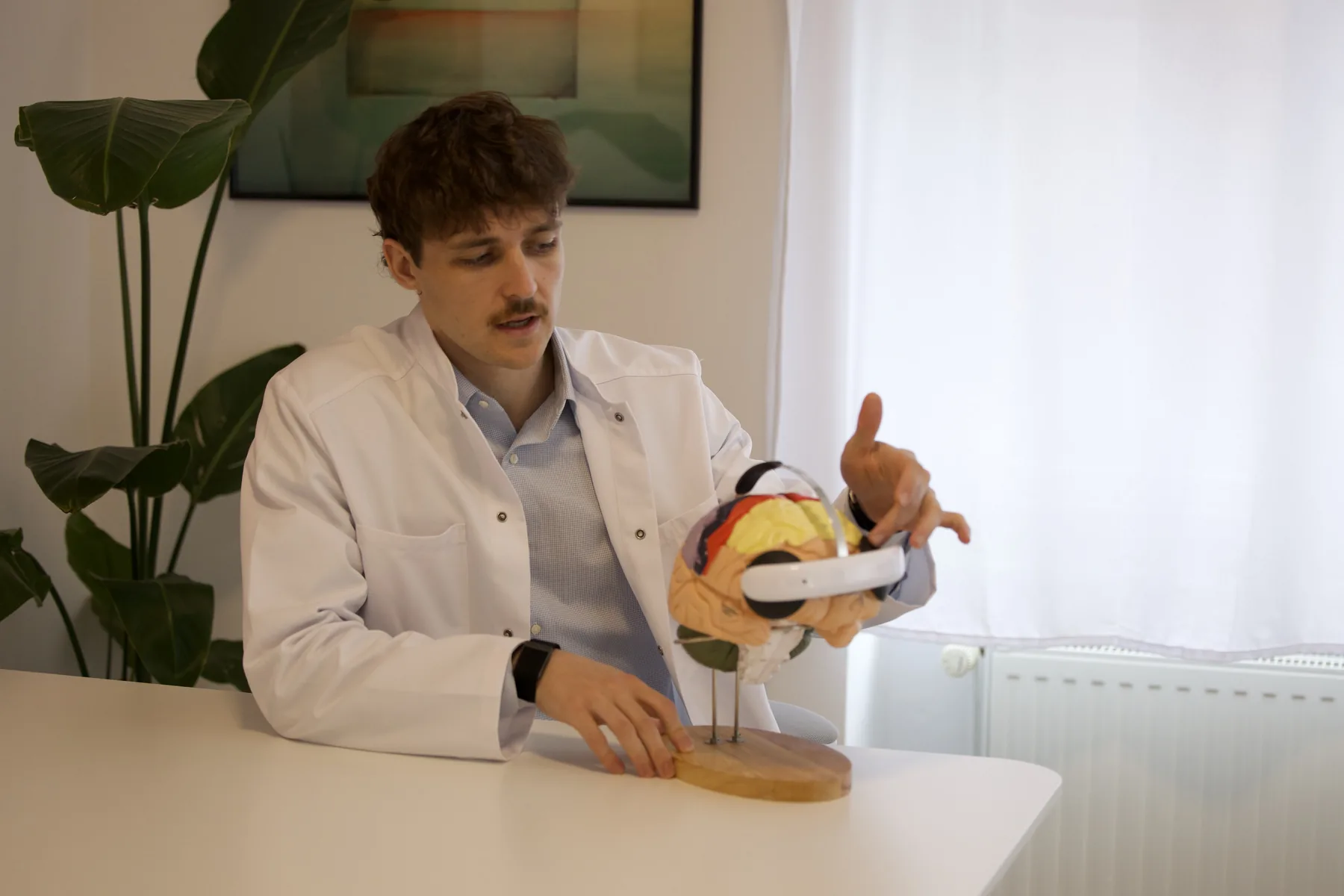
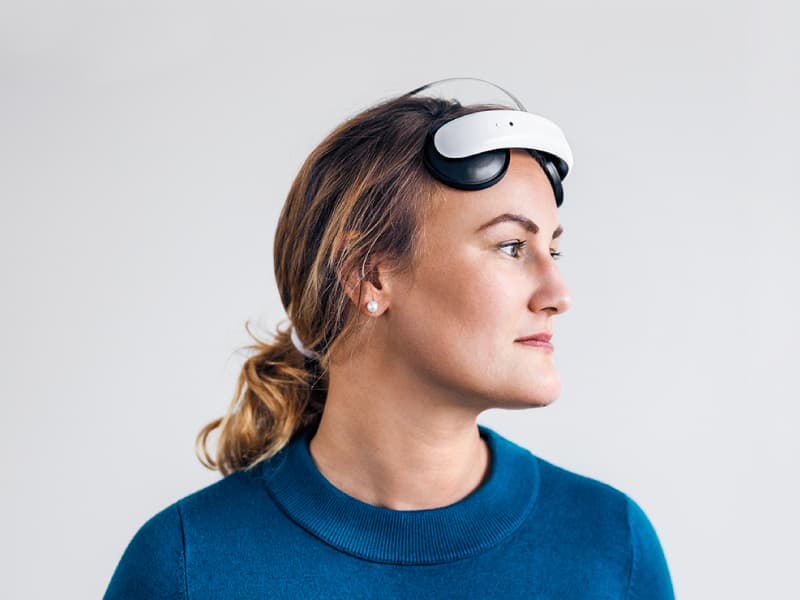
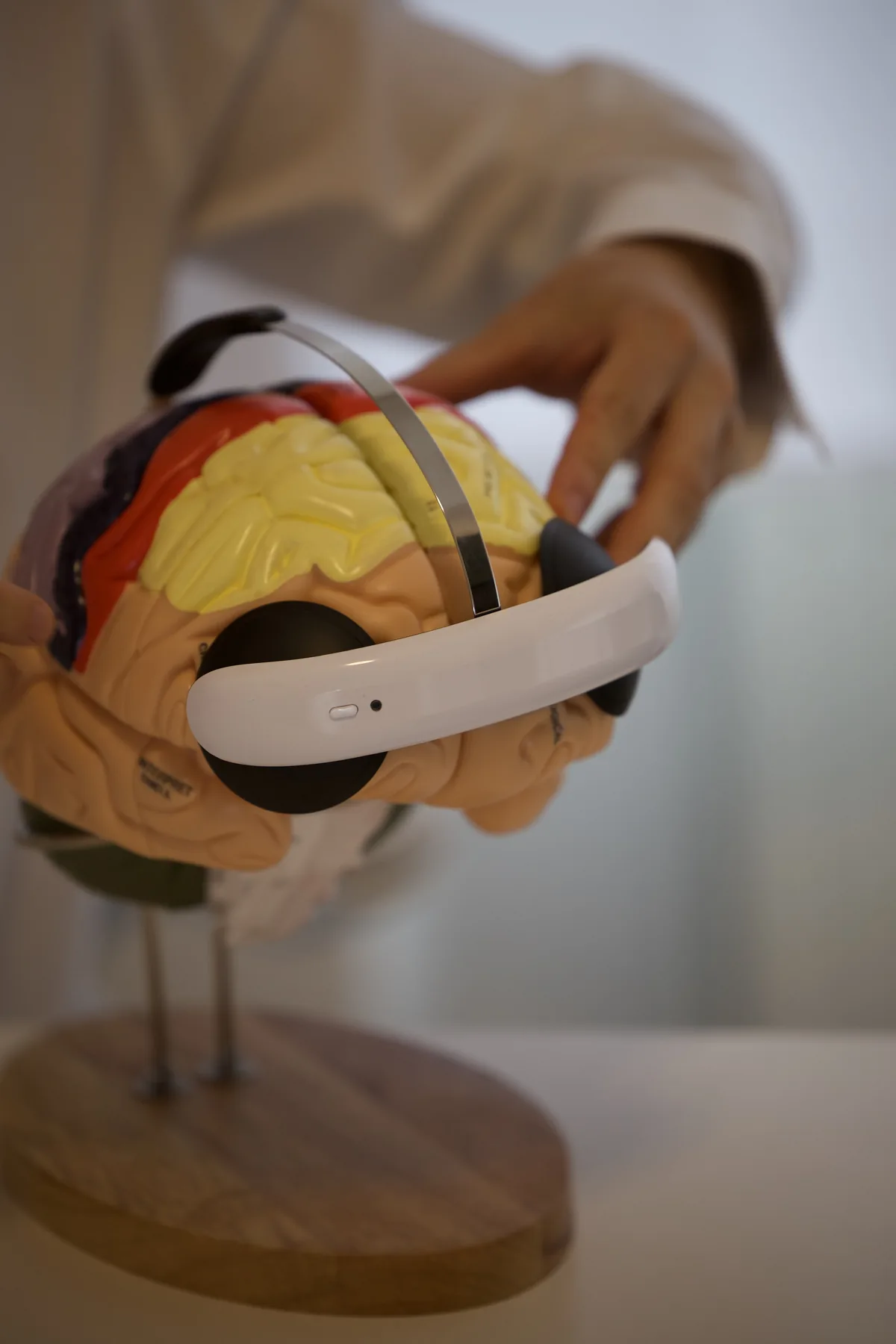
For tDCS treatment, we use a CE-certified medical device (Class IIa) approved in the EU for the treatment of unipolar depression in adults. It precisely stimulates the left dorsolateral prefrontal cortex (DLPFC) - a key region in the brain's depression network that often shows reduced activity in people with depressive disorders.
Stimulation is delivered with a weak direct current of 2 mA for 30 minutes per session. Most patients notice only a mild tingling or warm sensation at the electrodes - both of which resolve quickly after the session.
Each treatment is medically planned and supervised at our practice.
Mechanism of Action
How does tDCS work in the brain?
The precise mechanisms are still being researched. The following have been well-described in the scientific literature:
Cortical Modulation
A weak direct current (2 mA) modulates the excitability of nerve cells beneath the electrodes. Under the anode, neuronal activity increases; under the cathode, it decreases - without directly triggering action potentials. This subthreshold effect is precisely controllable and well tolerated.
Synaptic Plasticity
Repeated stimulation sessions can trigger neurobiological changes similar to long-term potentiation (LTP) - the cellular basis of learning. NMDA receptors and the GABAergic system are involved. Neuroimaging studies have demonstrated structural plasticity changes in the brain following tDCS.
Network Normalisation
In depression, the brain shows altered activity patterns - particularly in the default mode network and salience network. Neuroimaging studies suggest that tDCS may influence these disrupted connectivity patterns.
Indication
Who is tDCS suitable for?
Our tDCS offering is for people with depression. Whether the procedure is suitable for your individual situation is assessed during the initial medical consultation.
- Unipolar depression (Major Depressive Disorder)
- Depressive episodes as a comorbidity of other conditions
- Desire for a medication-free treatment option
- Adjunct to ongoing psychiatric or psychotherapeutic treatment
In a placebo-controlled study (Woodham et al. 2024, Nature Medicine, n=173), patients with depression showed significant improvement after 10 weeks of tDCS compared to the control group. Multiple meta-analyses involving more than 1,000 participants support these findings.
tDCS is a self-pay service in Germany. No guarantee of efficacy can be given. Suitability is assessed individually by the treating physician.
Treatment Process
How the treatment works
From the initial consultation to follow-up monitoring - outpatient and easily compatible with everyday life.
Contact
Get more information
Free of charge by email. We will get back to you without obligation.
Suitability is assessed by a doctor in each individual case. The treatments are self-pay services; private health insurers often reimburse them.